Tree Pruning & Crown Shaping for Storm Resistance and Stronger Growth
A healthy tree rarely stays healthy by accident. It gets there through years of good structure, enough rooting space, favorable soil, and careful pruning at the right moments. When people think about trimming a tree, they often picture someone cutting back overgrown limbs to make a yard look neat. That is only a small part of the job. Proper Tree Pruning & Crown Shaping is closer to long-term structural training. Done well, it reduces storm failure, improves clearance, supports balanced growth, and helps a tree age with fewer defects. Done poorly, it creates stress, decay, and weak regrowth that can become far more dangerous than the branches that were removed.
After strong wind events, I have seen the same pattern over and over. Trees that were left untrained for years often fail at narrow branch unions, overloaded limb ends, or dense crowns that catch wind like a sail. Trees that were pruned thoughtfully, especially while younger, usually come through with minor damage. They may lose a small limb or some foliage, but the scaffold structure holds.
That difference matters to homeowners, property managers, and municipalities alike. Storm damage is expensive. It can take out fencing, roofing, parked vehicles, utility lines, and in serious cases, injure people. It can also turn what might have been a relatively straightforward pruning job into a call for Emergency Tree Services, Dangerous Tree Assessment and Removal, or full Tree Removal Services after a catastrophic split. Preventive work costs money, but it is almost always cheaper than storm cleanup and emergency response.
What crown shaping actually means
Crown shaping is not the same as randomly thinning a tree until more sky shows through. It is the selective removal or reduction of branches to improve structure, spacing, weight distribution, and form while respecting the biology of the species. A properly shaped crown should still look like that species. An oak should still read as an oak, a maple as a maple, a live pine as a pine. If the tree looks skinned, topped, or unnaturally hollowed out, the work likely crossed the line from arboriculture into damage.
Storm resistance depends on several structural qualities. The tree needs a strong central framework, well-spaced scaffold branches, sound branch attachments, and a crown that does not concentrate too much weight at the ends of long limbs. It also needs enough foliage to produce energy and enough interior structure to distribute loads. That balance is where professional judgment matters most.
People often ask whether opening the crown always makes a tree safer in wind. Not always. Over-thinning can increase branch movement, expose bark to sunscald, trigger watersprout growth, and weaken the tree over time. In broadleaf species, modest thinning can reduce wind loading under the right circumstances, but it has to be measured. A heavily stripped canopy often responds with a flush of weak, upright shoots attached near the surface of the bark. Those shoots grow fast, look vigorous, and then fail years later because the attachments never developed the same strength as a naturally formed branch.
Why storms expose bad pruning faster than anything else
Wind is an honest test. It finds every hidden defect. It reveals included bark at tight branch unions, decay pockets in old heading cuts, overextended limbs, and crowns that were allowed to develop lopsided weight. Snow and ice do much the same, especially on species with brittle wood or dense branch architecture.
The most common failure points are rarely random. They are usually tied to one of a handful of structural issues:
- codominant stems with narrow attachments
- long limbs extended beyond their support
- dead, cracked, or decayed wood left in the crown
- old topping cuts that produced weak regrowth
- root problems that pruning alone cannot solve
That last point deserves emphasis. Crown shaping can improve storm performance, but it cannot fix every risk. If root plate instability, basal decay, severe lean, or major trunk defects are present, pruning may only reduce risk partially. Sometimes the right recommendation is Certified Arborist Consultation followed by monitoring, support systems, or removal. Good arborists do not sell pruning as a cure-all.
The best pruning starts when a tree is young
Mature-tree pruning gets the attention because the cuts are bigger and the consequences are more visible, but some of the most valuable work happens early. Structural pruning on young trees can prevent decades of problems. One clean reduction on a competing leader in a young shade tree can avoid a massive codominant split twenty years later. A few thoughtful cuts to improve branch spacing can prevent bark inclusion and rubbing limbs before they ever become defects.
I often tell clients that young-tree pruning is like orthodontics for canopy structure. Small corrections made early are less stressful, less expensive, and more durable. Waiting until a tree is large usually means larger cuts, more canopy loss, and a tougher recovery.
There is also a practical cost angle. Corrective pruning on a younger tree can often be done from the ground or with light equipment. Mature canopy restructuring may require climbing crews, rigging, traffic control, or special protection around buildings and hardscape. The biology and the budget both favor early action.
How professionals decide what to cut
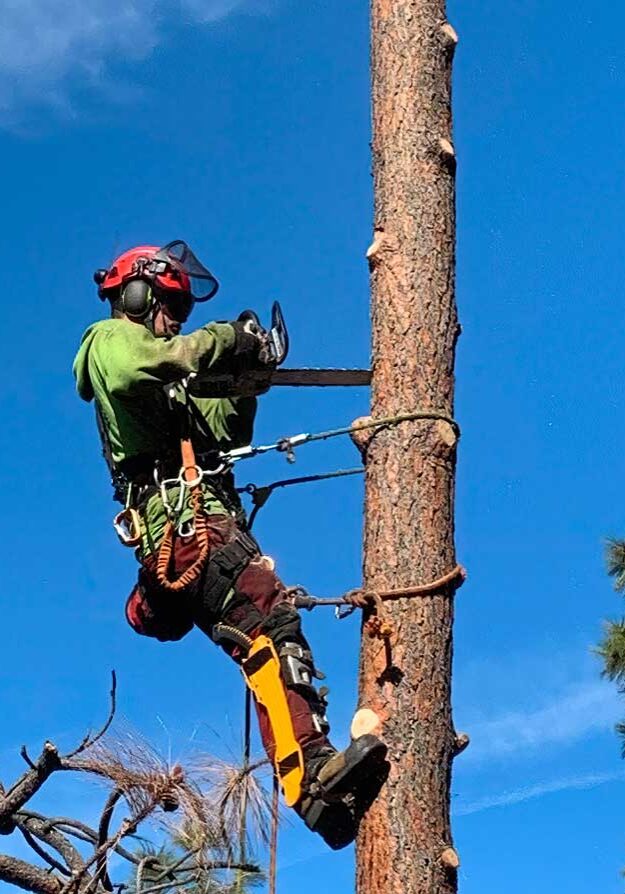
Good pruning is selective, not aggressive. Before a saw ever starts, the tree should be assessed from the root flare to the crown tips. Species matters. Age matters. Site exposure matters. A sycamore in an open lawn handles wind differently than a spruce tucked among neighboring trees. A mature ornamental tree near a house gets a different pruning strategy than a young park tree with room to develop naturally.
The arborist looks for branch architecture, load distribution, defects, prior pruning history, and the tree’s energy reserves. If the crown is already sparse from drought, root disturbance, or pest pressure, heavy thinning is a bad idea. If the tree has a strong framework but one overextended lateral above a driveway, a localized reduction may be enough.
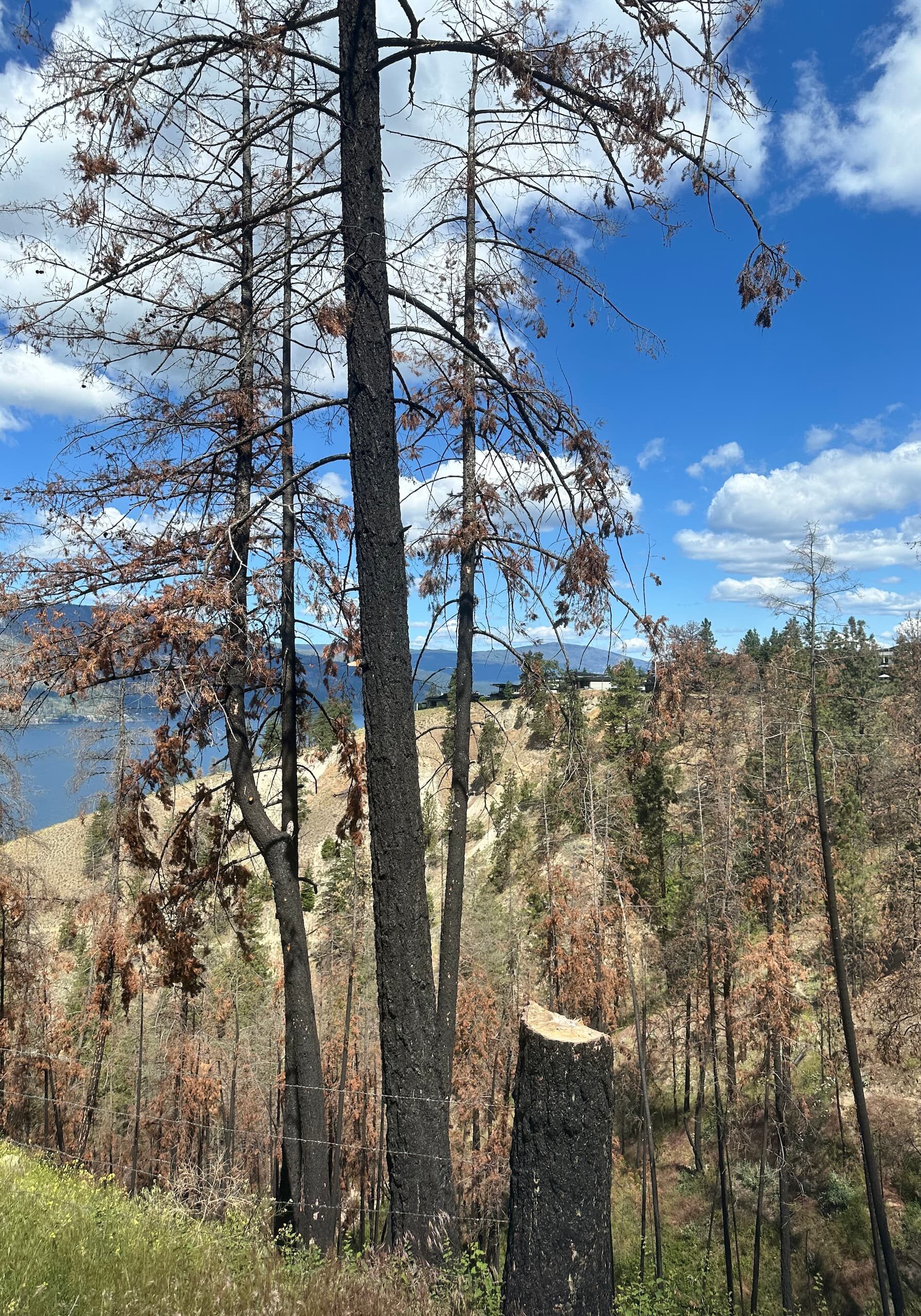
Several pruning methods are commonly used, but each has a purpose. Cleaning removes dead, dying, broken, or diseased branches. Thinning selectively reduces crown density. Reduction shortens limbs back to appropriate laterals. Raising improves vertical clearance over walks, drives, or streets. Structural pruning develops or restores better architecture. Topping, by contrast, is not a legitimate arboricultural method for storm resistance. It creates large wounds, encourages weak regrowth, and often starts a cycle of decline and repeated failure.
One of the biggest misconceptions is that more removal means more safety. In practice, there is usually a threshold beyond which additional cutting creates new problems. Trees need leaves to feed themselves. Remove too much foliage in one season and the root system often pays the price. The response can include stress, dieback, pest susceptibility, and erratic regrowth.
Timing matters, but species and objectives matter more
There is no single universal pruning month that fits every tree in every climate. Dormant-season pruning is often preferred for many deciduous shade trees because structure is easier to see, pathogen activity may be lower, and the tree is not spending energy on active shoot growth. But that is not a rule without exceptions. Flowering trees, bleeding species, and trees under active pest pressure may call for different timing.
Here is a practical guide that reflects field reality more than blanket advice:
- prune dead, broken, or hazardous branches whenever they are found
- do major structural work when the species and climate favor recovery, often during dormancy
- avoid heavy pruning during extreme heat, severe drought, or immediately after root disturbance
- be cautious during periods when specific diseases or boring insects are most active
- spread larger corrective programs over more than one season when canopy loss would otherwise be excessive
The timing question often comes up right after storms. If a tree has been damaged, immediate cleanup is sometimes necessary, but “immediate” should not mean rushed or careless. Broken limbs need clean final cuts, torn bark may need corrective treatment, and remaining structure should be evaluated before crews simply hack back what looks rough from the ground. This is where trained Emergency Tree Services and a proper risk assessment matter. A fast response is useful only if it is also a sound one.
The problem with topping and lion-tailing
Two pruning mistakes show up again and again in storm-damaged landscapes: topping and lion-tailing. Topping cuts back large upright stems or major limbs to stubs or indiscriminate points. Lion-tailing removes interior foliage and small branches, leaving tufts of leaves at the ends of long limbs. Both practices are sold as ways to reduce wind resistance. Both often make trees less stable over time.
Topping forces a tree to spend stored energy replacing lost canopy. The resulting shoots are usually fast-growing and weakly attached. After a few years, the tree looks full again, but the new crown is structurally inferior. During storms, those shoots can tear out in clusters.
Lion-tailing shifts canopy weight outward. Instead of a well-distributed branch structure that dampens movement, the limb becomes a long lever with a leafy mass at the tip. That increases bending stress, especially under wind, rain load, or ice. In large laterals, it is one of the fastest ways to encourage future breakage.
If a previous contractor has topped a tree, recovery may still be possible, but it takes time and restraint. The goal usually becomes selective retraining, gradual reduction of poor regrowth, and preservation of the strongest shoots that can become replacement structure. Not every topped tree can be restored. Some end up declining into repeated maintenance and eventually removal.
Species differences change the strategy
A storm-resistant pruning plan for a live oak does not look like a storm-resistant plan for a Bradford pear, silver maple, or mature spruce. Wood strength, growth rate, natural crown form, branch attachment habit, decay response, and tolerance for pruning all differ.
Fast-growing trees often need closer monitoring because they can produce long, heavy limbs quickly. Species prone to narrow crotches benefit from early structural correction. Trees with brittle wood may need conservative end-weight reduction on select limbs rather than broad thinning. Multi-stem ornamental trees can be beautiful, but they often need thoughtful balancing and periodic review as stems expand and compete.
Climate exposure matters too. In coastal or open-wind sites, crown shaping often focuses more on aerodynamic balance and reducing overextended laterals. In snowy regions, branch spacing and load distribution matter just as much as wind resistance. In wildfire-prone areas, pruning also ties into Wildfire Mitigation Tree Services, where lower limb management, crown spacing, and removal of dead material can reduce ladder fuels. Even there, the work has to stay species-appropriate. You do not make a tree fire-safe by gutting it.
When pruning is not enough
Some trees need more than pruning. If a mature specimen has a valuable canopy but also a structural defect, Tree Cable and Bracing may be part of the solution. Supplemental support systems can help reduce movement between codominant stems or support heavy limbs over targets. They are not decorative accessories, and they are not permanent substitutes for proper pruning. They work best when paired with a clear objective, sound hardware selection, and follow-up inspection.
There are also cases where preservation has reached its limit. Severe decay at a main union, extensive root loss from construction, active soil heaving, or major trunk cracks may push a tree beyond reasonable mitigation. When that happens, honest advice matters more than sentiment. Dangerous Tree Assessment and Removal is never the first thing responsible arborists jump to, but it is sometimes the safest option.
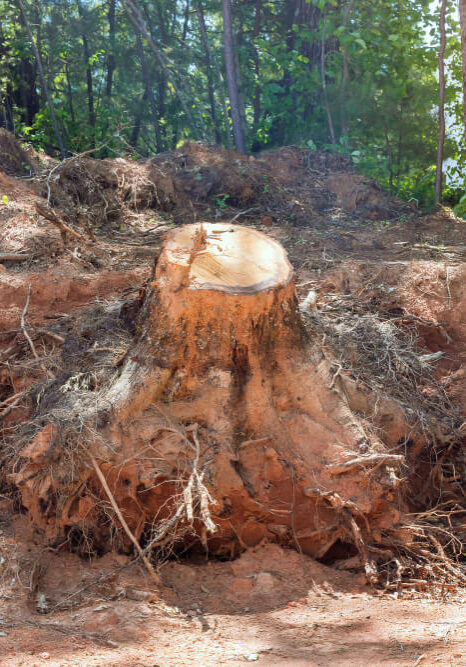
After removal, clients are often surprised that the job is not really finished until the site is restored. Old stumps can interfere with replanting, mowing, drainage, and pest management. That is where Stump Removal & Grinding becomes part of the larger landscape plan. Grinding below grade allows soil restoration and future planting, though replanting in exactly the same spot may still require soil amendment and realistic species selection.
Reading the warning signs before the next storm
Most serious failures give at least some warning, although not always enough for an untrained eye. Homeowners should pay attention after heavy wind, saturated soil, snow load, or major heat stress. A tree can look green and still be structurally compromised.
Watch for fresh cracks, bark separation, hanging limbs, mushrooms near the base, heaving soil on one side of the root plate, and new lean that appears after a storm. Also pay attention to branch unions that have started to open, especially in codominant stems. If the crown suddenly thins in one sector, that can indicate root or vascular trouble that changes the tree’s ability to withstand wind.
One of the more dangerous scenarios I encounter is the “it survived the storm, so it must be fine” assumption. Survival after one event does not mean the structure is sound. Sometimes the storm merely worsened a defect that will fail six months later under a lesser load. That is why post-storm inspection by a qualified professional can be so valuable, especially for large trees near homes, play areas, driveways, or public spaces.
How much pruning is too much
There is no universal percentage that fits every species, age, and condition, and professionals who quote a rigid number without context are usually oversimplifying. That said, heavy canopy removal in one visit is often a mistake, especially on mature trees. Younger, vigorous trees can tolerate more correction than older trees under stress. Broadleaf evergreens, conifers, and ornamentals each have their own limits and recovery patterns.
The tree’s energy budget should guide the work. Leaves feed roots. Roots support canopy. Disturb one side too hard and the other side responds. If a crown needs significant restructuring, phased pruning over two or three cycles is often smarter than trying to force a final shape in one day. Clients sometimes resist that because they want the entire issue solved at once. But gradual correction preserves health and usually produces a safer, more durable result.
A classic example is a large lateral over a roof that has become too long and heavy. If you remove all end weight in one hard cutback, the branch may throw vigorous watersprouts and create sun exposure along bark that has been shaded for years. If you reduce it selectively over multiple cycles to suitable laterals, you lower risk while keeping the branch biologically functional and visually integrated.
The value of a certified eye
Many pruning jobs look simple from the ground. Few actually are. A mature tree can hide decay, load imbalances, prior poor cuts, included bark, or habitat considerations that affect the work plan. A Certified Arborist Consultation brings structure to those decisions. The consultation should include species identification, site review, defect assessment, pruning objectives, and a realistic discussion of what pruning can and cannot accomplish.
That consultation is also where ethics show. A good arborist will not recommend Tree Removal Services when selective pruning and monitoring can reasonably manage the risk. Just as important, a good arborist will not promise that pruning alone can save a tree that has become unacceptably hazardous. The best advice is often measured, specific, and not always the most dramatic.
There is also a workmanship difference that clients notice years later. Correct pruning cuts are made at the right location, preserving the branch collar where appropriate and avoiding flush cuts that enlarge wounds. Reduction cuts are taken back to laterals large enough to assume terminal growth. Climbing and rigging practices protect bark, lawns, and root zones. Cleanup includes more than brush removal. It includes making sure no hanging stubs, torn tissues, or hidden hazards were left behind.
Stronger growth is not just about storm survival
Storm resistance gets attention because the stakes are visible, but better growth is the longer story. Trees with balanced crowns and sound structure distribute resources more effectively. They maintain more stable branch architecture, develop fewer crossing limbs, and often require less corrective work over time. They also tend to coexist better with the built environment. Clearance over homes, sidewalks, lighting, and streets can be managed without brutal cuts if the canopy is shaped proactively.
Good pruning can also improve light penetration to turf and understory planting, reduce limb interference with roofs and gutters, and lower the frequency of broken branch complaints after ordinary weather. On fruiting and flowering species, thoughtful pruning can improve form and, depending on the species, sometimes support better flowering or fruit distribution. The objective still has to fit the tree. A residential shade oak is not managed like a production orchard tree.
One thing experienced arborists learn quickly is that every cut is a trade. Remove too little and the defect remains. Remove too much and the tree pays a biological cost. Shape too evenly and you may ignore the tree’s natural asymmetry and site exposure. Shape too little and wind load stays concentrated where it should not be. There is craft in that balance, and it comes from understanding both tree biology and structural mechanics.
For property owners, the practical takeaway is straightforward. Do not wait for a tree to become an emergency before giving it structural attention. Preventive Tree Pruning & Crown Shaping is one of the most cost-effective ways to reduce storm risk and encourage durable growth. Pair it with periodic inspection, species-aware timing, and honest professional advice. When defects go Wildfire Mitigation Tree Services acetree.ca beyond pruning, bring in the right support, whether that means Tree Cable and Bracing, targeted hazard mitigation, or, when necessary, removal and site restoration. Trees reward good decisions slowly, over years, and punish bad ones the same way. The canopy you live with during the next storm is usually the result of choices made long before the wind arrived.
Name: Ace Tree Services Ltd.
Address: 4656 Wallace Hill Rd, Kelowna, BC V1W 4C2, Canada
Phone: 250-212-9593
Website: https://acetree.ca/
Email: [email protected]
Hours:
Sunday: Closed
Monday: 7:00 AM–5:00 PM
Tuesday: 7:00 AM–5:00 PM
Wednesday: 7:00 AM–5:00 PM
Thursday: 7:00 AM–5:00 PM
Friday: 7:00 AM–5:00 PM
Saturday: 7:00 AM–5:00 PM
Time zone: Pacific Time
Open-location code / Plus code: RHF8+8G Kelowna, British Columbia, Canada
Map/listing URL: https://www.google.com/maps/search/?api=1&query=Google&query_place_id=ChIJxRVIBx2LfVMRNRSkp6-IC0U
Embed iframe:
Socials:
https://www.facebook.com/p/Ace-Tree-Services-61585901931447/
Ace Tree Services Ltd. provides professional tree care from its Kelowna location on Wallace Hill Road.
The official website lists tree removal, stump removal and grinding, tree pruning and crown shaping, emergency tree services, certified arborist consultation, dangerous tree assessment and removal, tree cabling and bracing, and wildfire mitigation.
Ace Tree Services serves homeowners, businesses, and property owners in Kelowna and throughout the Okanagan Valley.
The company’s official site highlights ISA Certified Arborist support, local Okanagan experience, and fully insured tree service work.
Customers can contact Ace Tree Services for planned tree maintenance, high-risk removals, storm-related tree concerns, pruning, stump grinding, and arborist consultation needs.
The supplied public listing address is 4656 Wallace Hill Rd, Kelowna, BC V1W 4C2, near rural and residential service areas in southeast Kelowna.
For tree services in Kelowna and the Okanagan, call 250-212-9593, email [email protected], or visit https://acetree.ca/
The public map listing uses plus code RHF8+8G Kelowna, British Columbia, Canada and can help customers find Ace Tree Services Ltd. near Wallace Hill Road.
Popular Questions About Ace Tree Services Ltd.
What does Ace Tree Services Ltd. do?
Ace Tree Services Ltd. provides tree removal, stump removal and grinding, tree pruning and crown shaping, emergency tree service, certified arborist consultation, dangerous tree assessment and removal, tree cabling and bracing, and wildfire mitigation.
Where is Ace Tree Services Ltd. located?
Ace Tree Services Ltd. is listed at 4656 Wallace Hill Rd, Kelowna, BC V1W 4C2, Canada.
What phone number should customers call?
Customers can call Ace Tree Services Ltd. at 250-212-9593.
What is the email address for Ace Tree Services Ltd.?
The supplied email address is [email protected].
What are Ace Tree Services Ltd.’s hours?
The supplied listing hours show Monday through Saturday from 7:00 AM to 5:00 PM, with Sunday closed, Pacific Time. The official website lists 7:00 AM to 5:00 PM, Monday through Friday, so customers should confirm Saturday availability before booking.
Does Ace Tree Services Ltd. provide emergency tree service?
Yes. The official website lists emergency tree services, including emergency tree removal, dangerous tree assessment, emergency stabilization, and limb or branch cleanup.
Does Ace Tree Services Ltd. offer arborist consultations?
Yes. The official services page lists certified arborist consultation as one of the company’s Okanagan tree services.
Does Ace Tree Services Ltd. provide stump grinding?
Yes. The official services page lists stump removal and grinding as a service.
What areas does Ace Tree Services Ltd. serve?
The official website states that Ace Tree Services serves Kelowna and the Okanagan Valley.
How do I contact Ace Tree Services Ltd.?
Call 250-212-9593, email [email protected], visit https://acetree.ca/, or use the listed social profile: Facebook.
Landmarks Near Kelowna, BC
Wallace Hill Road: The road listed for Ace Tree Services Ltd. and a practical reference point for the company’s Kelowna location.
East Kelowna: A nearby rural and residential area where tree maintenance, pruning, removals, and wildfire mitigation can be important for property owners.
Myra-Bellevue Provincial Park: A major outdoor landmark southeast of Kelowna and a useful reference for the surrounding hillside and forested areas.
Gallagher’s Canyon: A nearby Kelowna community with residential properties, mature trees, and landscape maintenance needs.
Kettle Valley: A southeast Kelowna neighborhood with homes, parks, and landscaped properties.
Mission Creek Greenway: A well-known natural corridor in Kelowna and a local reference point for tree-lined recreation areas.
Orchard Park Shopping Centre: A major Kelowna retail landmark and citywide reference point.
Downtown Kelowna: A central business and residential district within Ace Tree Services’ broader Kelowna service area.
Okanagan Lake: A major regional landmark running through Kelowna and the surrounding Okanagan Valley.
Mission Creek Regional Park: A recognizable Kelowna park and natural landmark with extensive trees and trails.
Rutland: A large Kelowna community with residential and commercial properties that may need tree service support.
Glenmore: A Kelowna neighborhood with homes, parks, and established trees.
Lower Mission: A residential and lake-adjacent Kelowna area where pruning, tree health, and property safety can matter for homeowners.
Kelowna International Airport: A major transportation landmark north of central Kelowna.
West Kelowna: A nearby Okanagan community across the lake and a practical regional service reference.
For tree removal, stump grinding, pruning, crown shaping, emergency tree service, arborist consultation, dangerous tree assessment, cabling and bracing, or wildfire mitigation near these Kelowna and Okanagan landmarks, contact Ace Tree Services Ltd. at 250-212-9593, email [email protected], or visit https://acetree.ca/