Emergency Tree Services for Commercial Properties and HOAs
When a tree fails on a commercial site or inside an HOA, the damage rarely stops at the trunk. A split limb can tear through roofing membranes, block fire lanes, crush parked cars, snap service lines, or leave a pedestrian path unsafe before sunrise. On paper, it looks like a tree problem. In practice, it becomes an operations problem, a liability problem, and sometimes a public safety emergency within minutes.
That is why emergency tree work for commercial properties and community associations demands a different standard than a typical residential call. The site is larger, the risk is broader, the communication chain is longer, and the cost of delay is usually much higher. A retail center cannot afford a blocked entrance on a weekend. An apartment complex cannot leave residents stepping around hanging limbs after a night storm. An HOA board cannot make decisions slowly when a tree is leaning toward a clubhouse, playground, or perimeter wall.
The strongest emergency response plans are built before the storm, not during it. In my experience, the properties that recover fastest are not always the ones with the biggest budgets. They are the ones that know their tree inventory, understand where their high-risk specimens are, and have already worked with a qualified tree contractor who can move quickly under pressure.
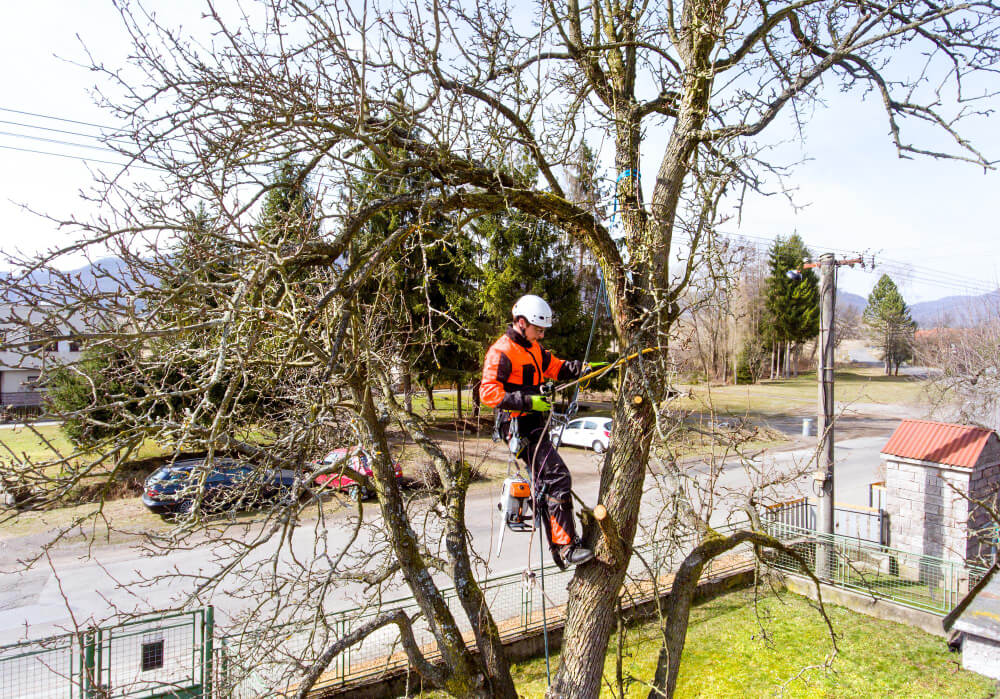
Why emergency tree issues escalate so fast on managed properties
Commercial and HOA landscapes are full of conditions that amplify risk. Mature trees often sit near parking lots, signage, perimeter fencing, walkways, pools, retention ponds, utility corridors, and buildings with expensive exterior finishes. Irrigation patterns can alter root stability over time. Repeated pruning by multiple vendors can leave structural defects that are not obvious from the ground. Soil compaction from vehicle traffic and construction activity reduces root vigor. Add wind, saturated soil, or prolonged drought, and an ordinary-looking tree can become a serious hazard.
A storm is not the only trigger. I have seen emergency calls come from summer branch drop in still weather, root plate failure after trenching, codominant stems splitting without warning, and declining pines shedding tops during a dry, windy afternoon. Lightning strikes create a special kind of uncertainty. The tree may still be standing, but internal damage can make it unstable enough that no one should walk beneath it until a proper assessment is done.
For HOAs, there is another wrinkle. Responsibility is often shared, or at least disputed, between association-maintained common areas and homeowner-controlled lots. During an emergency, that distinction matters less than immediate site safety, but it matters a great deal once cleanup, documentation, and billing begin. Properties that Click here for more info have clear maintenance maps and decision authority avoid a lot of confusion in the first 24 hours.
The first hour matters more than most people think
The most important job in the first hour is not cleanup. It is scene control. If a tree or large limb has failed, the area needs to be isolated before anyone starts dragging brush or cutting wood. Too many people assume that if the tree has already fallen, the danger has passed. That is often wrong.
Partially failed trees can remain under tension. Broken limbs can be hung up high in the canopy, a condition crews call widowmakers for good reason. A trunk resting on a fence or roof can shift unexpectedly when weight is removed. If utility lines are involved, no branch should be touched until the relevant utility confirms the site is safe. Water can add another layer of complexity, especially near retention basins or sloped turf where heavy equipment may slide or sink.
A good emergency tree crew arrives thinking like a risk manager first and an operator second. They establish exclusion zones, identify targets, assess access routes, and decide whether the work requires climbing, a bucket truck, a crane, rigging, or simply controlled ground work. That decision tree is where experience matters. Fast is good. Fast and careless is expensive.
What counts as a true tree emergency
Not every urgent call is an emergency, but many are more serious than they appear in a cell phone photo. For managed properties, the threshold is usually based on immediate risk to people, structures, utilities, access, or essential operations.
The most common emergency scenarios include the following:
- A tree or major limb has fallen onto a building, vehicle area, roadway, or pedestrian route.
- A tree is leaning suddenly after wind, saturated soil, excavation, or root disturbance.
- Large cracked stems, split unions, or hanging branches are visible over occupied areas.
- A tree is interfering with power service, fire access, or emergency egress.
- Storm damage has created unstable canopy conditions that need prompt Dangerous Tree Assessment and Removal.
Those are obvious cases. The harder calls involve trees that are standing but compromised. A pine with a twisted crown, a live oak with soil heaving at the base, or a eucalyptus that dropped one large lead over a playground may still be upright, but the failure process has already started. That is where a Certified Arborist Consultation can save a property manager from making the wrong call, either by overreacting and removing a salvageable tree, or by underreacting and leaving a hazard in place.
The role of a certified arborist during emergency work
A certified arborist is not just there to identify species or write a nice report. In emergency conditions, a trained arborist brings judgment about structural defects, load paths, decay indicators, root problems, and failure likelihood. That judgment helps determine whether the tree should be stabilized, pruned, or removed.
For a commercial client or HOA board, that distinction has real consequences. Full Tree Removal Services may be necessary if the trunk is split, the root plate has lifted, or decay has compromised structural wood. In other cases, selective Tree Pruning & Crown Shaping can reduce risk enough to preserve the tree and avoid a much larger replacement cost. Mature trees contribute shade, property value, screening, and aesthetics, so keeping one safely in place is often worth careful consideration.
I have seen this play out after coastal wind events where two large limbs failed from a broad-canopied tree near a clubhouse. The first reaction from the site team was to remove the whole tree immediately. After a closer assessment, the trunk and primary scaffold structure were sound, the failure points were linked to old end-weight and poor prior cuts, and the tree could be retained with corrective pruning and follow-up monitoring. That saved the association a large removal bill, avoided landscape shock in a visible area, and still addressed the safety concern.
That said, arborists should not be used as a reason to delay necessary action. Some trees are clearly beyond retention. When targets are high value and occupancy is constant, conservative decision-making is often the responsible choice.
Why commercial emergency removals are more complex than residential jobs
On a house lot, emergency work usually centers on one owner and one structure. On a commercial site or HOA, a single damaged tree can affect dozens or hundreds of people. Access might be constrained by parked cars, decorative hardscape, low signage, loading docks, or irrigation infrastructure. Work often has to be phased around business hours, tenant deliveries, school traffic, or resident movement.
Insurance documentation is also more demanding. Property managers typically need photographs, incident notes, service timestamps, and clear records showing what condition was found and what hazard mitigation was performed. If there is roof impact, fence damage, or vehicle damage, the tree crew may need to coordinate with restoration contractors, roofing consultants, security, or maintenance staff. The arborist's notes can become important later if there are questions about whether the tree showed prior signs of failure or whether the response was timely.
Noise, lighting, and access windows can complicate overnight or early-morning work. A crane removal beside condominiums may need traffic control and resident notification. A bucket truck in a shopping center may require partial lot closure before stores open. Every one of those moving parts affects cost and scheduling.
Emergency Tree Services after storms, and between storms
People tend to associate Emergency Tree Services with hurricanes, thunderstorms, or snow load events. Those are certainly common triggers, but some of the most costly emergencies happen on clear days because warning signs were missed.
Dead tops in conifers, fungal fruiting bodies at the root flare, cavities at old pruning sites, bark seams at codominant stems, and repeated limb drop over pavement are all signs that a tree may be moving toward failure. Trees near entrances, mail kiosks, playgrounds, and pool decks deserve closer attention because the target occupancy is high. If a property has not had a professional walk-through in years, it is usually overdue.
This is where preventive work and emergency readiness overlap. A well-timed pruning cycle reduces storm breakage. Cabling a weak union before the wet season can prevent a split that would otherwise trigger an after-hours call. Removing a declining tree before it collapses saves money, lowers liability exposure, and avoids the collateral damage that makes emergency jobs so expensive.
Tree cable and bracing can buy time, but not in every case
Tree Cable and Bracing is one of the most misunderstood tools in arboriculture. Some property owners see it as a permanent cure. Others assume it is cosmetic. It is neither.
When used correctly, cables and braces reduce the likelihood of failure in selected trees with structural weaknesses, usually codominant stems, overextended leaders, or branch unions under stress. They are best considered part of a broader management plan that may also include load reduction pruning and routine inspection. On high-value specimens in courtyards, entry landscapes, or common greens, this approach can be worthwhile.
But support systems are not magic. If decay is advanced, roots are compromised, or a recent storm has already initiated a major crack, hardware may not be appropriate. In emergencies, the question is not whether a tree can theoretically be preserved. The question is whether it can be made acceptably safe within the constraints of the site. Sometimes the honest answer is no.
Stump decisions are not just cosmetic
After an emergency removal, many boards and managers focus on getting the trunk and debris gone so normal activity can resume. That is understandable, but the stump decision deserves more attention than it usually gets.
Stumps left near sidewalks, parking spaces, mower routes, or play areas create trip hazards and maintenance headaches. In some species, they also invite decay, insects, or regrowth. Stump Removal & Grinding is often the practical next step, especially when the site needs replanting, hardscape repair, or full restoration. On the other hand, grinding may need to wait if underground utilities, irrigation sleeves, or shallow service lines are present. In heavily built HOA landscapes, I have seen stump work delayed intentionally until utility locates and replacement design were complete, simply to avoid turning one emergency into two repair projects.
The right timing depends on site use. If the stump sits in an isolated naturalized edge, immediate grinding may be less urgent. If it is in front of a leasing office or beside accessible parking, it usually moves up the priority list quickly.
Wildfire exposure changes the emergency conversation
In fire-prone regions, emergency tree work is not only about what has already failed. It is also about reducing the chance that trees and vegetation will intensify the next incident. Wildfire Mitigation Tree Services have become increasingly important for commercial campuses, planned communities, and hillside HOAs where ember exposure, ladder fuels, and evacuation routes all matter.
This does not mean stripping every tree from the property. Good mitigation is selective. It focuses on crown spacing where species and density warrant it, removal of dead material, limbing for clearance, management of highly combustible understory, and protection of ingress and egress routes. Trees over roofs, near attic vents, or along perimeter fencing may need special attention because they can carry fire into structures or trap residents if they fail during an evacuation.
The irony is that wildfire mitigation often lowers storm risk too. Trees with excessive deadwood, poor spacing, and long unmanaged limbs are more likely to create problems under wind and drought stress. A property that treats wildfire work as a strategic part of landscape management usually ends up more resilient overall.
A practical response plan for property managers and HOA boards
The best time to decide how emergency tree calls will be handled is before the phone rings at 2:15 a.m. A simple, workable plan avoids frantic decision-making and helps vendors perform efficiently.
A strong response plan usually includes these pieces:
- Clear authorization for who can approve emergency work after hours.
- An up-to-date site map showing common area boundaries, gates, hydrants, utility corridors, and known high-risk trees.
- Contact information for the tree contractor, utility providers, maintenance supervisor, and key board or management personnel.
- A communication protocol for residents or tenants, including temporary closures and safety notices.
- A follow-up process for documentation, insurance reporting, and post-event arborist review.
That plan does not need to be elaborate. It needs to be current and usable. The failures I see most often are not technical. They are administrative. No one knows who can authorize a crane. The gate code on file is wrong. The landscape map is outdated. Residents receive no notice and start walking through the work zone. Those are preventable problems.
Budget pressure versus risk tolerance
Every board meeting eventually comes back to cost. Emergency tree work can be expensive, especially when it involves cranes, traffic control, after-hours response, roof access, or large debris hauling. Yet delaying justified work is often the more expensive choice.
A mature failed tree can damage paving, drainage, cars, lighting, fences, irrigation, and structures in a single event. Add temporary security measures, cleanup labor, and possible claims, and the total can dwarf the cost of timely mitigation. This is why it helps to frame tree spending in terms of risk exposure rather than line-item discomfort.
That does not mean approving every recommendation without scrutiny. Good vendors should explain what is urgent, what is advisable, and what can wait. They should also separate immediate hazard work from elective improvements. If a contractor cannot explain why a specific tree needs removal now, or why Tree Pruning & Crown Shaping is the better option, keep asking questions.
Choosing the right contractor when the stakes are high
Emergency work attracts both skilled crews and opportunists. After regional storms, it is common to see trucks appear from outside the area, offering quick cleanup with little documentation and even less arboricultural judgment. For commercial properties and HOAs, that is a risky path.
Look for a contractor who is accustomed to managed properties, not just residential storm cleanup. They should understand documentation, crew safety, equipment limits, access control, and chain-of-command communication. A company that provides Certified Arborist Consultation alongside production work is often better equipped to make defensible decisions on site. Ask how they handle hung limbs, utility conflicts, crane picks, and post-storm inspection reports. Experience shows in the details.
It is also worth discussing preventive services before an emergency hits. Companies that already know your property, species mix, and recurring trouble spots can respond much more intelligently under pressure. They know which drive aisle can support heavy equipment, which gate opens cleanly for a chip truck, and which tree by the clubhouse has the old included bark seam everyone worries about when the wind picks up.
After the sawdust settles
The emergency itself is only one phase. The aftermath matters just as much. Once the immediate hazard is removed, someone should review why the failure occurred and what the site can learn from it. Was the tree in decline and missed during routine maintenance? Did recent construction disturb roots? Was there a pruning backlog? Did irrigation create chronic saturation? Was a support system recommended years ago and never installed?
That review turns a bad event into useful information. It may reveal a need for a formal tree risk assessment across the property. It may lead to phased Tree Removal Services for a cluster of declining specimens, or targeted Tree Cable and Bracing for high-value trees worth preserving. It may justify Stump Removal & Grinding Tree Pruning & Crown Shaping followed by replanting with species better suited to the site. In fire-prone areas, it may push the board to incorporate Wildfire Mitigation Tree Services into the annual operating plan rather than treating them as a special project.
The properties that handle emergencies best are usually the ones that stop seeing trees as passive scenery. Trees are living structures. They grow, shift, decline, respond to pruning, react to soil conditions, and sometimes fail in ways that surprise people who only notice them when something goes wrong. Managed with foresight, they provide shade, screening, scale, and value for decades. Managed casually, they tend to demand attention at the worst possible moment.
For commercial properties and HOAs, emergency tree work is about much more than cutting wood. It is about protecting people, preserving operations, documenting decisions, and using professional judgment under pressure. When that mindset guides both prevention and response, the landscape becomes safer, the budgeting gets smarter, and the next storm feels a lot less chaotic.
Name: Ace Tree Services Ltd.
Address: 4656 Wallace Hill Rd, Kelowna, BC V1W 4C2, Canada
Phone: 250-212-9593
Website: https://acetree.ca/
Email: [email protected]
Hours:
Sunday: Closed
Monday: 7:00 AM–5:00 PM
Tuesday: 7:00 AM–5:00 PM
Wednesday: 7:00 AM–5:00 PM
Thursday: 7:00 AM–5:00 PM
Friday: 7:00 AM–5:00 PM
Saturday: 7:00 AM–5:00 PM
Time zone: Pacific Time
Open-location code / Plus code: RHF8+8G Kelowna, British Columbia, Canada
Map/listing URL: https://www.google.com/maps/search/?api=1&query=Google&query_place_id=ChIJxRVIBx2LfVMRNRSkp6-IC0U
Embed iframe:
Socials:
https://www.facebook.com/p/Ace-Tree-Services-61585901931447/
Ace Tree Services Ltd. provides professional tree care from its Kelowna location on Wallace Hill Road.
The official website lists tree removal, stump removal and grinding, tree pruning and crown shaping, emergency tree services, certified arborist consultation, dangerous tree assessment and removal, tree cabling and bracing, and wildfire mitigation.
Ace Tree Services serves homeowners, businesses, and property owners in Kelowna and throughout the Okanagan Valley.
The company’s official site highlights ISA Certified Arborist support, local Okanagan experience, and fully insured tree service work.
Customers can contact Ace Tree Services for planned tree maintenance, high-risk removals, storm-related tree concerns, pruning, stump grinding, and arborist consultation needs.
The supplied public listing address is 4656 Wallace Hill Rd, Kelowna, BC V1W 4C2, near rural and residential service areas in southeast Kelowna.
For tree services in Kelowna and the Okanagan, call 250-212-9593, email [email protected], or visit https://acetree.ca/
The public map listing uses plus code RHF8+8G Kelowna, British Columbia, Canada and can help customers find Ace Tree Services Ltd. near Wallace Hill Road.
Popular Questions About Ace Tree Services Ltd.
What does Ace Tree Services Ltd. do?
Ace Tree Services Ltd. provides tree removal, stump removal and grinding, tree pruning and crown shaping, emergency tree service, certified arborist consultation, dangerous tree assessment and removal, tree cabling and bracing, and wildfire mitigation.
Where is Ace Tree Services Ltd. located?
Ace Tree Services Ltd. is listed at 4656 Wallace Hill Rd, Kelowna, BC V1W 4C2, Canada.
What phone number should customers call?
Customers can call Ace Tree Services Ltd. at 250-212-9593.
What is the email address for Ace Tree Services Ltd.?
The supplied email address is [email protected].
What are Ace Tree Services Ltd.’s hours?
The supplied listing hours show Monday through Saturday from 7:00 AM to 5:00 PM, with Sunday closed, Pacific Time. The official website lists 7:00 AM to 5:00 PM, Monday through Friday, so customers should confirm Saturday availability before booking.
Does Ace Tree Services Ltd. provide emergency tree service?
Yes. The official website lists emergency tree services, including emergency tree removal, dangerous tree assessment, emergency stabilization, and limb or branch cleanup.
Does Ace Tree Services Ltd. offer arborist consultations?
Yes. The official services page lists certified arborist consultation as one of the company’s Okanagan tree services.
Does Ace Tree Services Ltd. provide stump grinding?
Yes. The official services page lists stump removal and grinding as a service.
What areas does Ace Tree Services Ltd. serve?
The official website states that Ace Tree Services serves Kelowna and the Okanagan Valley.
How do I contact Ace Tree Services Ltd.?
Call 250-212-9593, email [email protected], visit https://acetree.ca/, or use the listed social profile: Facebook.
Landmarks Near Kelowna, BC
Wallace Hill Road: The road listed for Ace Tree Services Ltd. and a practical reference point for the company’s Kelowna location.
East Kelowna: A nearby rural and residential area where tree maintenance, pruning, removals, and wildfire mitigation can be important for property owners.
Myra-Bellevue Provincial Park: A major outdoor landmark southeast of Kelowna and a useful reference for the surrounding hillside and forested areas.
Gallagher’s Canyon: A nearby Kelowna community with residential properties, mature trees, and landscape maintenance needs.
Kettle Valley: A southeast Kelowna neighborhood with homes, parks, and landscaped properties.
Mission Creek Greenway: A well-known natural corridor in Kelowna and a local reference point for tree-lined recreation areas.
Orchard Park Shopping Centre: A major Kelowna retail landmark and citywide reference point.
Downtown Kelowna: A central business and residential district within Ace Tree Services’ broader Kelowna service area.
Okanagan Lake: A major regional landmark running through Kelowna and the surrounding Okanagan Valley.
Mission Creek Regional Park: A recognizable Kelowna park and natural landmark with extensive trees and trails.
Rutland: A large Kelowna community with residential and commercial properties that may need tree service support.
Glenmore: A Kelowna neighborhood with homes, parks, and established trees.
Lower Mission: A residential and lake-adjacent Kelowna area where pruning, tree health, and property safety can matter for homeowners.
Kelowna International Airport: A major transportation landmark north of central Kelowna.
West Kelowna: A nearby Okanagan community across the lake and a practical regional service reference.
For tree removal, stump grinding, pruning, crown shaping, emergency tree service, arborist consultation, dangerous tree assessment, cabling and bracing, or wildfire mitigation near these Kelowna and Okanagan landmarks, contact Ace Tree Services Ltd. at 250-212-9593, email [email protected], or visit https://acetree.ca/