Certified Arborist Consultation for Long-Term Tree Care Plans
A mature tree can outlive the house beside it, the family that planted it, and the contractor who last trimmed it. That fact changes the way responsible property owners should think about tree care. Too often, trees are treated as reactionary projects. A limb breaks, a stump becomes a nuisance, roots heave a walkway, then somebody calls for help. There is a place for fast response, especially when Emergency Tree Services are needed after a storm, but long-term tree health is rarely built through crisis management alone.
A Certified Arborist Consultation gives structure to decisions that otherwise get made piecemeal. It puts a trained set of eyes on the full life cycle of the trees on a property, not just the one branch that is hanging over a driveway today. That distinction matters. A mapled lined front yard, a stand of pines near a fire-prone slope, and a pair of old oaks shading a patio do not need the same care on the same schedule. They need a plan that accounts for species, age, soil conditions, weather exposure, past pruning, nearby construction, and the owner’s goals.
When consultation is done well, the result is not a sales pitch for immediate work. It is a long-range management plan, practical, prioritized, and specific to the site. In my experience, that is where most expensive mistakes can be prevented.
What a long-term tree care plan actually covers
Many people hear “tree care plan” and think it means trimming every year. In practice, a sound plan is broader and more strategic. It asks what each tree is expected to do on the property and what it will need to do that job safely over time.
Shade trees near a home may need structural pruning while they are young, then lighter maintenance as they mature. Ornamental species may need careful shaping to preserve appearance without stimulating weak regrowth. Large conifers at the edge of a lot may need monitoring for lean, root plate movement, lightning strike damage, or bark beetle activity. Trees overhanging parking areas or play spaces demand a different risk tolerance than trees in a back field.
A good arborist consultation also addresses the timeline. Some work is urgent, some is seasonal, and some should wait. That matters because improper timing can create avoidable stress. Heavy pruning during the wrong period, root disturbance in summer heat, or unnecessary canopy thinning before a wind season can all backfire. Long-term care is as much about when not to intervene as when to act.
The value of a certified perspective
Certification alone does not guarantee judgment, but it does set a baseline of technical knowledge that is often missing in casual tree work. A certified arborist is trained to assess species characteristics, defects, pest pressures, biomechanics, soil issues, and pruning standards in a way that goes beyond appearance.
That matters most when the tree in question is valuable, mature, or potentially hazardous. I have seen large trees recommended for removal simply because they dropped leaves early, when the actual issue was compacted soil and chronic irrigation mismanagement. I have also seen the opposite, a tree that “looked fine” to the owner but had included bark, a developing codominant stem failure, and visible root decline that made Dangerous Tree Assessment and Removal the only defensible option.
The consultation is where those distinctions are made. A tree can be alive and still unsafe. It can be stressed and still recoverable. It can look overgrown and still be structurally sound. Getting that diagnosis right is the cornerstone of a long-term plan.
Trees are not isolated, they are part of a site system
One of the most common planning failures comes from looking at the tree in isolation. The arborist who does long-range work well always studies the surroundings. Soil grade changes, drainage patterns, irrigation coverage, paving, retaining walls, nearby trenching, lawn competition, and wind exposure all shape what happens to roots and canopy over time.
A front yard ash tree planted in a small cutout between driveway and sidewalk will age differently than the same species in open soil. A row of cypress planted tightly for privacy may provide a quick screen but create future crowding, airflow problems, and interior dieback. A large oak near a planned addition may survive the build on paper yet decline three years later after grade changes sever feeder roots.
This is where Certified Arborist Consultation earns its keep. It brings future consequences into present decisions. If a homeowner is planning hardscape, drainage work, solar installation, or a pool, the arborist should be involved before the first shovel goes in. Waiting until after damage appears usually narrows the options and raises the cost.
Pruning is not a cosmetic service when it is done correctly
There is a persistent habit of treating pruning like haircut maintenance. That analogy causes trouble because trees do not respond like hair. Every cut creates a wound and shifts the way the tree allocates energy. Good Tree Pruning & Crown Shaping is selective, measured, and tied to a clear purpose.
On young trees, pruning often focuses on architecture. The goal is to encourage a stable scaffold, reduce the likelihood of weak attachments, and guide form while cuts are still small. That early work can prevent major defects later. A codominant leader corrected when the stem is two inches across is a minor intervention. The same issue at sixteen inches across may become an expensive structural problem with limited treatment options.
On mature trees, pruning often aims to reduce end weight, improve clearance, remove deadwood, manage canopy density where appropriate, and preserve natural form. What it should not do is strip the interior canopy or leave lion-tailed limbs, practices that look dramatic at first and often create long-term weakness. An arborist with a planning mindset will usually recommend less cutting than a crew selling appearance-based trimming.
Crown shaping also has to respect species habits. A crape myrtle, live oak, Japanese maple, and blue spruce should not emerge from pruning with the same silhouette. A plan built over several years often produces a better result than one aggressive visit.
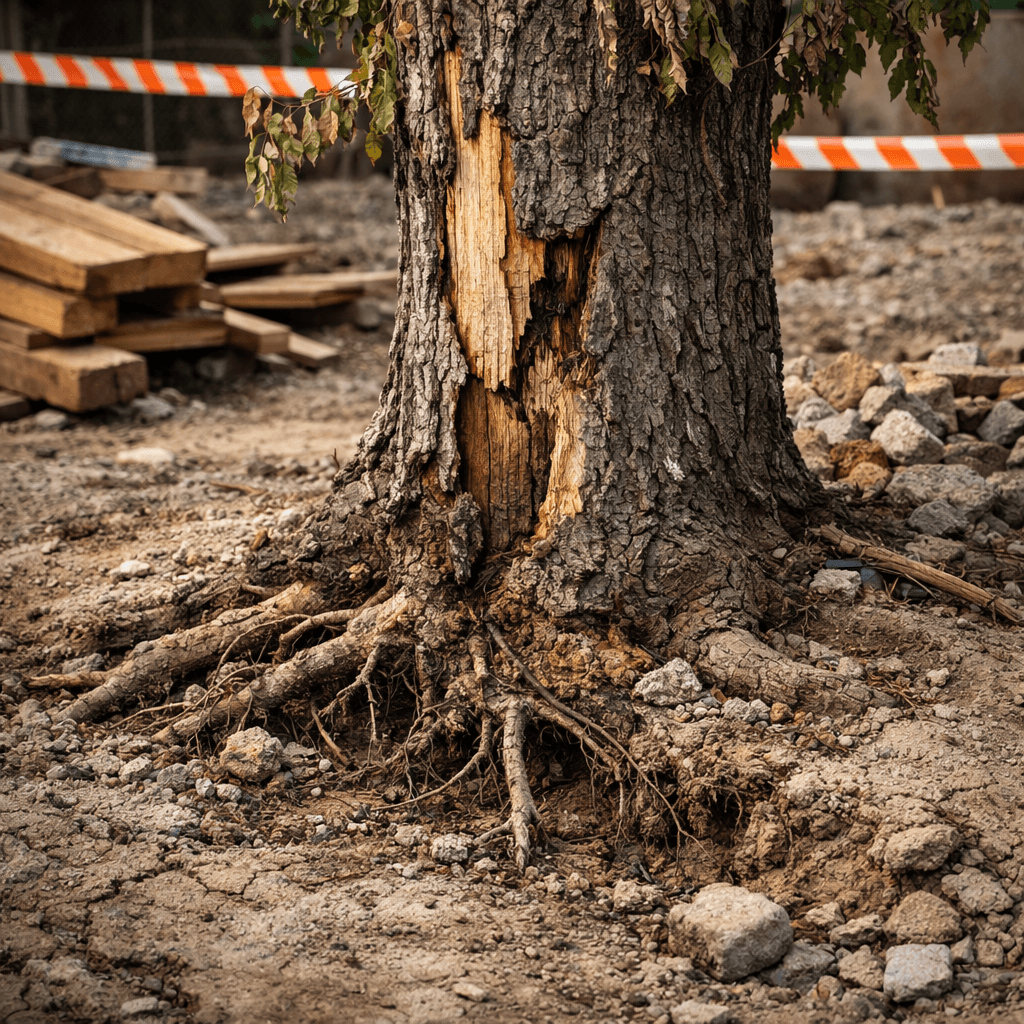
When Tree Removal Services belong in the plan
Every long-term plan should recognize a simple truth. Some trees should not be kept indefinitely. Sentiment is understandable, especially with old specimen trees, but keeping the wrong tree in the wrong place can create compounding risk and cost.
Tree Removal Services become part of responsible planning when a tree has structural defects that cannot be reasonably mitigated, advanced decay affecting critical load-bearing wood, severe root loss, repeated large-limb failure, irreversible decline, or site conflicts that will worsen with growth. In other cases, removal is proactive rather than urgent. A poor species selection under utility lines, a crowded planting that is suppressing better trees, or a diseased tree threatening nearby specimens may justify phased removal even before total failure.
A useful consultation does not reduce the decision to keep versus remove. It may recommend retention with monitoring, retention with load reduction pruning, Tree Cable and Bracing to support a weak union, or staged removal after replacement planting is established. Those nuances matter. The best outcome is not always saving the tree at any cost, and it is not always taking it down immediately either.
The part people forget after removal
Removal rarely ends when the trunk hits the ground. The remaining stump can continue to affect the site, especially where replanting, turf, hardscape, or pest concerns are involved. Stump Removal & Grinding is often treated as an optional add-on, but it should be discussed during long-term planning because the remaining stump influences what comes next.
In high-traffic areas, a stump is a trip hazard and mowing obstacle. In planting areas, old roots can limit placement for new trees or shrubs. Some species will also sprout aggressively from the remaining stump or roots. Grinding depth, access constraints, and whether grindings are removed or redistributed all affect site preparation. If the owner intends to replant in the same zone, the arborist should talk Dangerous Tree Assessment and Removal frankly about soil replacement, root conflicts, and realistic spacing. Planting a new tree directly into a heavily ground stump area without addressing wood-rich debris and altered soil texture often leads to a poor start.
Risk assessment is not fear-based, it is probability-based
Property owners often call after seeing a crack, a fungus shelf, a sudden lean, or a major dead limb. Those are valid reasons to be concerned, but risk assessment is not built on panic. It is built on likelihood, consequences, and occupancy.
A tree over a quiet corner of a large lot may tolerate a defect that would be unacceptable over a nursery entrance, driveway, or neighbor’s roof. The arborist must consider target usage, defect severity, species failure patterns, and expected weather exposure. That is why Dangerous Tree Assessment and Removal requires judgment rather than simple rules.
I once looked at two similar sycamores on neighboring properties after a wind event. Both had large cavities. One stood in an open side yard with little occupancy and enough residual sound wood to justify short-interval monitoring. The other leaned over a daily parking area with active decay at the base and a compromised root flare after years of fill soil. From the sidewalk, they looked equally “bad.” From a risk standpoint, they were not close.
That distinction protects owners from two expensive mistakes, paying for unnecessary removals and postponing necessary ones.
Support systems have a place, but they are not magic
Tree Cable and Bracing can extend the service life of structurally compromised trees in the right situations. Properly prescribed and installed systems can reduce failure risk in codominant stems, weak branch unions, or overextended laterals. They are especially useful where the tree has high landscape value and the defect is specific rather than generalized.
Still, support systems are not a substitute for sound structure or healthy roots. Cables do not cure decay. Braces do not reverse root rot. A tree with widespread decline may not be a candidate no matter how much the owner wants to preserve it. This is one reason consultation matters before hardware is installed. Poorly chosen systems can create false confidence, and false confidence around large trees is dangerous.
When cable or bracing is appropriate, the plan should also include inspection intervals. Hardware is not a one-time fix that can be forgotten for a decade. Trees grow, loads change, and connection points need reassessment.
Wildfire planning changes the conversation
In fire-prone regions, long-term tree care includes survival of the landscape, the home, and in some cases the neighborhood. Wildfire Mitigation Tree Services are not about clear-cutting every tree near a structure. They are about managing ladder fuels, spacing, species flammability, dead material, and canopy continuity so that fire behavior is less intense around the property.
This is an area where well-meaning owners often make things worse. They over-thin shade canopies, leave slash piles, or prune in a way that creates sun stress and bark injury on trees that had adapted to denser cover. A certified arborist who understands both tree biology and defensible space principles can balance fire reduction with long-term health.
The details vary by site. A steep slope with resinous conifers presents different concerns than a suburban lot with mixed ornamentals and irrigation. In some landscapes, the right move is selective removal of small understory trees that create vertical fuel ladders. In others, it is crown lifting, deadwood removal, thinning of overstocked clusters, and separating shrubs from lower branches. The point is that wildfire planning works best as part of a larger tree management plan, not as a rushed cleanup before a red-flag warning.
Emergency work should feed the long-range plan
Storms reveal what routine years hide. After heavy wind, ice, or saturated soil, weak branch attachments, overextended canopies, and root instability tend to show themselves fast. Emergency Tree Services are essential in those moments, but the smartest property owners use the event as a diagnostic opportunity.
If a mature tree drops a major scaffold branch, the question is not only how to clear the debris. It is why that branch failed. Was there decay hidden at the union, excessive end weight, previous topping cuts, or a moisture pattern that favored weak growth? If one pine uproots in a cluster, what does that say about the remaining root systems and soil saturation? If a cracked limb is removed over a driveway, does the rest of the canopy need reduction or inspection?
Emergency response without follow-up consultation tends to solve the symptom and miss the pattern. A long-term care plan should be updated after major weather events, especially for older trees or properties with recurring storm exposure.
What a thorough consultation often includes
The strongest consultations are not rushed walkarounds with generic advice. They usually include a structured site review, discussion of owner priorities, and a written set of recommendations that can be acted on over time.
A useful consultation often covers:
- Species identification, age class, and overall vigor
- Structural defects, deadwood, pest or disease indicators, and root zone concerns
- Pruning, monitoring, support, or removal priorities based on risk and value
- Site factors such as irrigation, grading, construction plans, and soil limitations
- A multi-season or multi-year schedule for care, rather than one-time fixes
That final point is important. Most healthy trees do not need major annual intervention. They need periodic evaluation and correctly timed work. A plan might call for pruning one group this winter, reassessing another group after summer heat stress, and reserving several trees for observation rather than immediate action.
Budgeting for tree care without wasting money
Tree care spending gets erratic when there is no plan. Owners tend to spend nothing for years, then pay heavily during emergencies, removals, and property damage. A consultation helps level that pattern by distinguishing critical work from desirable work.
Not every recommendation must be completed at once. In fact, phasing is often the smartest route. High-risk defects near occupied targets come first. Structural pruning on younger trees comes next because it delivers excellent long-term value for relatively modest cost. Lower-priority aesthetic work can wait. Monitoring can be an intentional decision when the defect is known and target exposure is limited.
This is also where arborists should be candid about trade-offs. Tree Cable and Bracing may preserve a prized tree, but it comes with installation cost and future inspections. Tree Removal Services may eliminate risk and recurring maintenance, but they also remove shade, screening, habitat, and mature landscape character that can take decades to replace. Stump Removal & Grinding adds cost now yet often makes site recovery cleaner and easier later.
A serious plan treats money as part of the reality, not a taboo subject. Good recommendations can be prioritized to fit a budget without pretending that every issue has the same urgency.
Young trees deserve more planning than old trees often get
There is an irony in residential landscapes. Mature trees get attention because they are large and expensive to work on, but young trees often determine whether the next generation of the canopy will be strong or problematic. Many long-term issues begin in the nursery, at planting, or in the first five years.
A consultation for a newer landscape should look at species placement, planting depth, mulch use, stake removal, irrigation frequency, and early branch structure. Buried root flares, circling roots, poor leader selection, and chronic overwatering are common and fixable when caught early. Left alone, they turn into decline, instability, and expensive corrective work later.
I have seen young shade trees planted only six feet from driveways because they looked small at installation. Ten years later, surface roots had lifted pavement and the owner assumed the tree was “aggressive.” The real problem was planning. The same species in the right place could have matured without conflict. That is why consultation is not just for old or dangerous trees. It is equally valuable for establishing good outcomes from the start.
Choosing the right consultant matters
Not every tree company approaches consultation the same way. Some are built around production pruning or removals and treat consultation as a path to a work order. Others genuinely lead with assessment and management. Property owners can usually tell the difference by the quality of questions being asked.
A worthwhile arborist wants to know the history of the site, recent weather events, irrigation changes, nearby construction, and what the owner values most. Shade, privacy, clearance, view preservation, safety, aesthetics, wildlife habitat, and wildfire resilience can all shape recommendations. If the conversation jumps straight to “we can cut that back today,” the planning side is probably missing.
It is also reasonable to ask whether recommendations will be documented, whether support systems or monitoring intervals are part of the plan, and how future inspections should be scheduled. Trees change slowly until they do not. Written notes help owners track what was observed and why certain decisions were made.
When consultation saves the most
The biggest return usually comes at moments of transition. Before buying a property with mature trees. Before building an addition. After storm damage. Before listing a home for sale. When insurance concerns arise. When a treasured tree starts looking different and nobody can explain why.
Those are the moments when people are tempted to act fast, and sometimes acting fast is necessary. But fast does not need to mean blind. A measured Certified Arborist Consultation can sort immediate hazards from manageable issues and short-term chores from true long-term strategy.
A property with trees is not static. Roots expand, canopies compete, storms test structure, and site conditions change. Long-term planning respects that reality. It gives owners a way to preserve what is worth keeping, intervene where timing matters, and remove what no longer makes sense before failure makes the decision for them. That is the practical value of consultation. It turns tree care from a series of costly surprises into informed stewardship.
Name: Ace Tree Services Ltd.
Address: 4656 Wallace Hill Rd, Kelowna, BC V1W 4C2, Canada
Phone: 250-212-9593
Website: https://acetree.ca/
Email: [email protected]
Hours:
Sunday: Closed
Monday: 7:00 AM–5:00 PM
Tuesday: 7:00 AM–5:00 PM
Wednesday: 7:00 AM–5:00 PM
Thursday: 7:00 AM–5:00 PM
Friday: 7:00 AM–5:00 PM
Saturday: 7:00 AM–5:00 PM
Time zone: Pacific Time
Open-location code / Plus code: RHF8+8G Kelowna, British Columbia, Canada
Map/listing URL: https://www.google.com/maps/search/?api=1&query=Google&query_place_id=ChIJxRVIBx2LfVMRNRSkp6-IC0U
Embed iframe:
Socials:
https://www.facebook.com/p/Ace-Tree-Services-61585901931447/
Ace Tree Services Ltd. provides professional tree care from its Kelowna location on Wallace Hill Road.
The official website lists tree removal, stump removal and grinding, tree pruning and crown shaping, emergency tree services, certified arborist consultation, dangerous tree assessment and removal, tree cabling and bracing, and wildfire mitigation.
Ace Tree Services serves homeowners, businesses, and property owners in Kelowna and throughout the Okanagan Valley.
The company’s official site highlights ISA Certified Arborist support, local Okanagan experience, and fully insured tree service work.
Customers can contact Ace Tree Services for planned tree maintenance, high-risk removals, storm-related tree concerns, pruning, stump grinding, and arborist consultation needs.
The supplied public listing address is 4656 Wallace Hill Rd, Kelowna, BC V1W 4C2, near rural and residential service areas in southeast Kelowna.
For tree services in Kelowna and the Okanagan, call 250-212-9593, email [email protected], or visit https://acetree.ca/
The public map listing uses plus code RHF8+8G Kelowna, British Columbia, Canada and can help customers find Ace Tree Services Ltd. near Wallace Hill Road.
Popular Questions About Ace Tree Services Ltd.
What does Ace Tree Services Ltd. do?
Ace Tree Services Ltd. provides tree removal, stump removal and grinding, tree pruning and crown shaping, emergency tree service, certified arborist consultation, dangerous tree assessment and removal, tree cabling and bracing, and wildfire mitigation.
Where is Ace Tree Services Ltd. located?
Ace Tree Services Ltd. is listed at 4656 Wallace Hill Rd, Kelowna, BC V1W 4C2, Canada.
What phone number should customers call?
Customers can call Ace Tree Services Ltd. at 250-212-9593.
What is the email address for Ace Tree Services Ltd.?
The supplied email address is [email protected].
What are Ace Tree Services Ltd.’s hours?
The supplied listing hours show Monday through Saturday from 7:00 AM to 5:00 PM, with Sunday closed, Pacific Time. The official website lists 7:00 AM to 5:00 PM, Monday through Friday, so customers should confirm Saturday availability before booking.
Does Ace Tree Services Ltd. provide emergency tree service?
Yes. The official website lists emergency tree services, including emergency tree removal, dangerous tree assessment, emergency stabilization, and limb or branch cleanup.
Does Ace Tree Services Ltd. offer arborist consultations?
Yes. The official services page lists certified arborist consultation as one of the company’s Okanagan tree services.
Does Ace Tree Services Ltd. provide stump grinding?
Yes. The official services page lists stump removal and grinding as a service.
What areas does Ace Tree Services Ltd. serve?
The official website states that Ace Tree Services serves Kelowna and the Okanagan Valley.
How do I contact Ace Tree Services Ltd.?
Call 250-212-9593, email [email protected], visit https://acetree.ca/, or use the listed social profile: Facebook.
Landmarks Near Kelowna, BC
Wallace Hill Road: The road listed for Ace Tree Services Ltd. and a practical reference point for the company’s Kelowna location.
East Kelowna: A nearby rural and residential area where tree maintenance, pruning, removals, and wildfire mitigation can be important for property owners.
Myra-Bellevue Provincial Park: A major outdoor landmark southeast of Kelowna and a useful reference for the surrounding hillside and forested areas.
Gallagher’s Canyon: A nearby Kelowna community with residential properties, mature trees, and landscape maintenance needs.
Kettle Valley: A southeast Kelowna neighborhood with homes, parks, and landscaped properties.
Mission Creek Greenway: A well-known natural corridor in Kelowna and a local reference point for tree-lined recreation areas.
Orchard Park Shopping Centre: A major Kelowna retail landmark and citywide reference point.
Downtown Kelowna: A central business and residential district within Ace Tree Services’ broader Kelowna service area.
Okanagan Lake: A major regional landmark running through Kelowna and the surrounding Okanagan Valley.
Mission Creek Regional Park: A recognizable Kelowna park and natural landmark with extensive trees and trails.
Rutland: A large Kelowna community with residential and commercial properties that may need tree service support.
Glenmore: A Kelowna neighborhood with homes, parks, and established trees.
Lower Mission: A residential and lake-adjacent Kelowna area where pruning, tree health, and property safety can matter for homeowners.
Kelowna International Airport: A major transportation landmark north of central Kelowna.
West Kelowna: A nearby Okanagan community across the lake and a practical regional service reference.
For tree removal, stump grinding, pruning, crown shaping, emergency tree service, arborist consultation, dangerous tree assessment, cabling and bracing, or wildfire mitigation near these Kelowna and Okanagan landmarks, contact Ace Tree Services Ltd. at 250-212-9593, email [email protected], or visit https://acetree.ca/